Heads in black stone and inscribed light. Bronzes and reliefs that do not yet exist. Images made with generative systems by a sculptor who has spent thirty years with stone — and a question about where, in that process, the sculpture lies.
The German word Schnittstelle carries a double meaning no other language holds: it names the interface — and, literally, the place where a cut was made.
I trained as a stonemason, passed the master craftsman's examination in 2003 and worked for two years as a sculptor in Carrara. Since then I have taken part in more than twenty-five sculpture symposia on four continents. For twenty years, digital modelling, photogrammetry and CNC fabrication have run alongside the work at the block.
The works shown here are made differently. They are images produced with generative systems, then selected, reworked and retouched by me, and in the case of the heads, animated. I say this plainly because it is the subject, not a footnote. The question is what remains of a sculptor's judgement when the form no longer comes from his hand: whether it survives the change of tool, and where exactly it now sits.
All of the works are made for screens. Some of them, the bronzes and reliefs of Tessera, are also proposals for objects that do not yet exist.
Every excavation begins with a single, deliberate wound. The archaeologist's trench and the sculptor's incision share the same logic: both open a sealed thing to see what it holds.
Nine heads, nine excavation sites. Each quotes an older grammar of the carved head — Cycladic idol, Art Deco helmet, Greek bust — as though the same dig kept turning up a different era. One cut opens the closed form.
What it uncovers is not a fault in the stone but a seam that was always there: gilded circuitry running through the head like ore through rock. The face is not the find; it is the way in.
Each head exists as a short animation and as a still. Both are the work; there is no object behind them.
Every element began as a generated image. What I bring is the stonemason's eye: which of many heads reads as stone rather than as a picture of stone, where the cut can sit without becoming decoration, when the light is right. Whether that is enough to call the result sculpture is the question the series leaves open.
None of these works was modelled by hand, and none has been carved. The process has four steps, and the question of authorship sits differently in each.
Generative image systems produce heads, surfaces and light from my descriptions: many variants for each work. The machine supplies form in quantity.
Choosing among them is curatorial work, and I do not pretend otherwise. But the criteria are a sculptor's: weight, proportion, how an edge breaks, whether a surface could be carved.
The chosen image is reworked by hand: retouched, corrected, the cut placed or moved, the light adjusted until the stone holds. Where the generator invents something no block would allow, it is taken out.
The heads are animated so that the cut reveals itself over time. The bronzes and reliefs remain stills: designs waiting for a material.
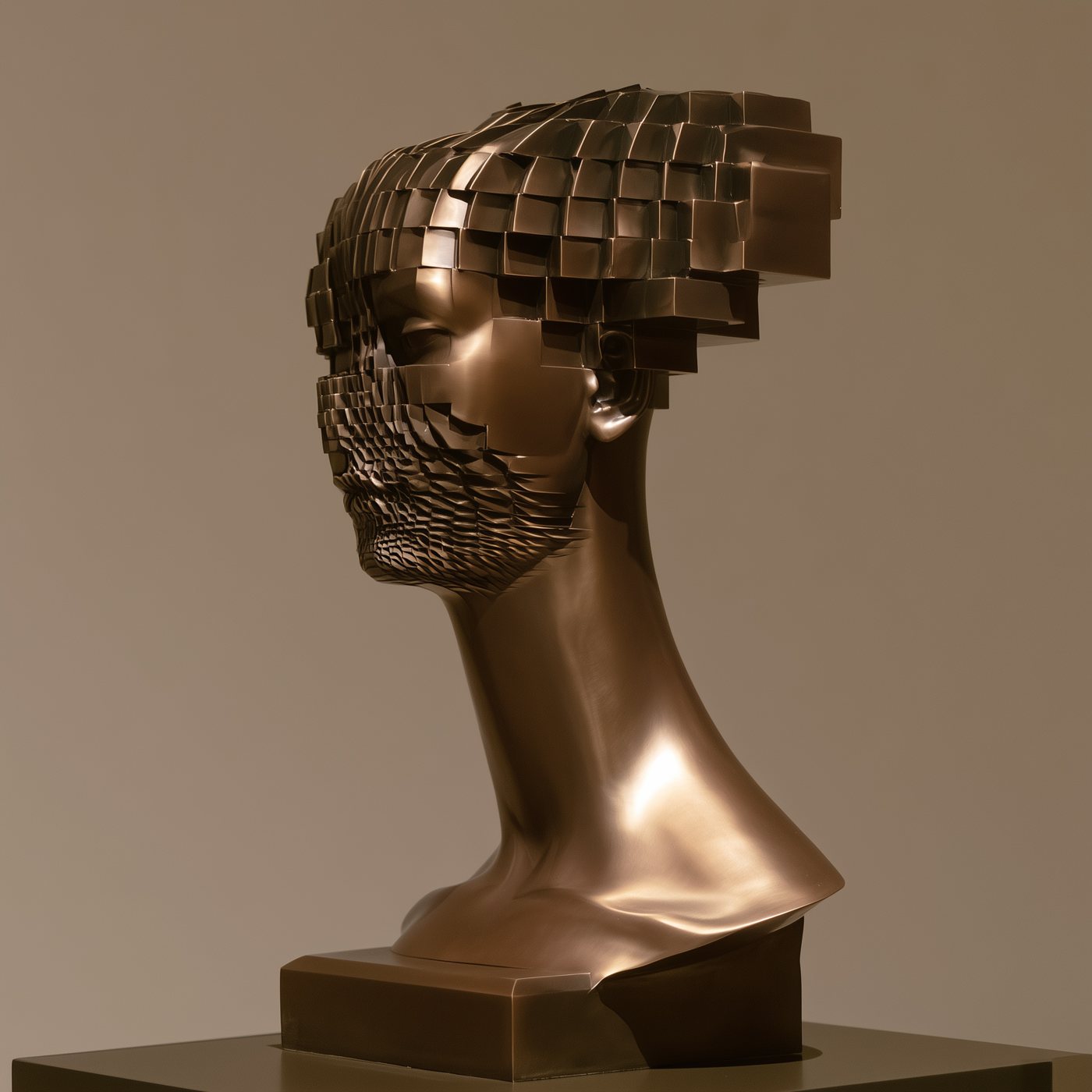
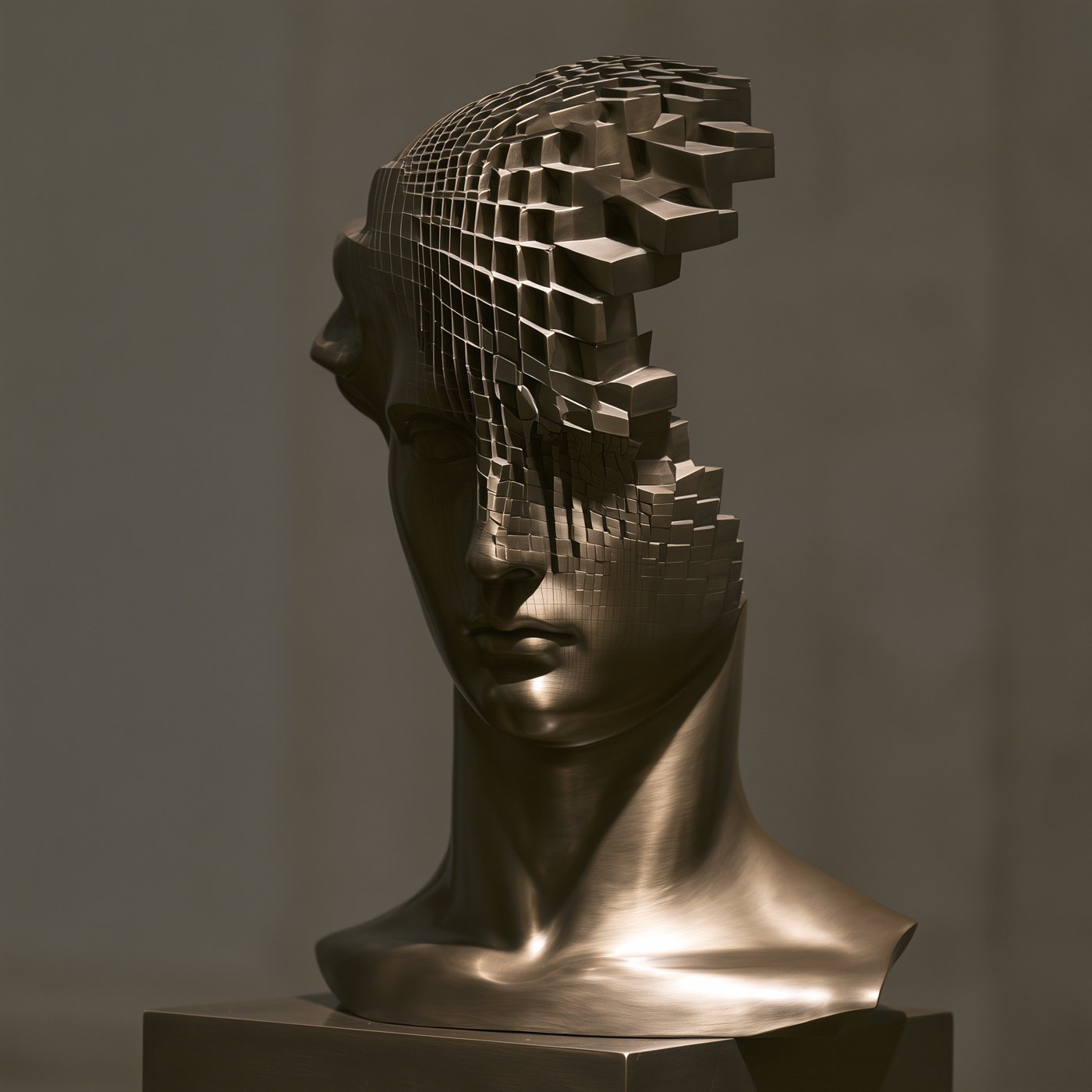
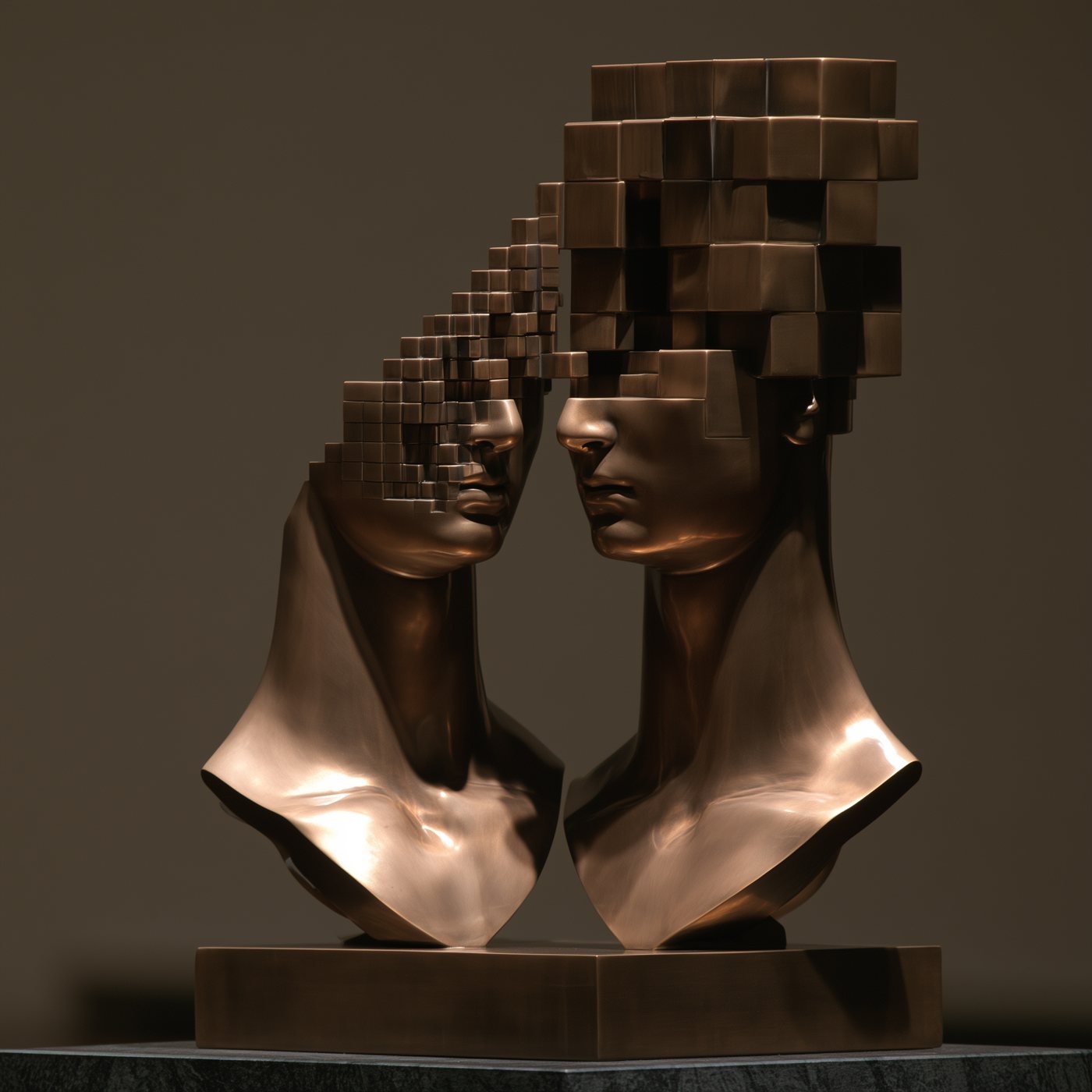
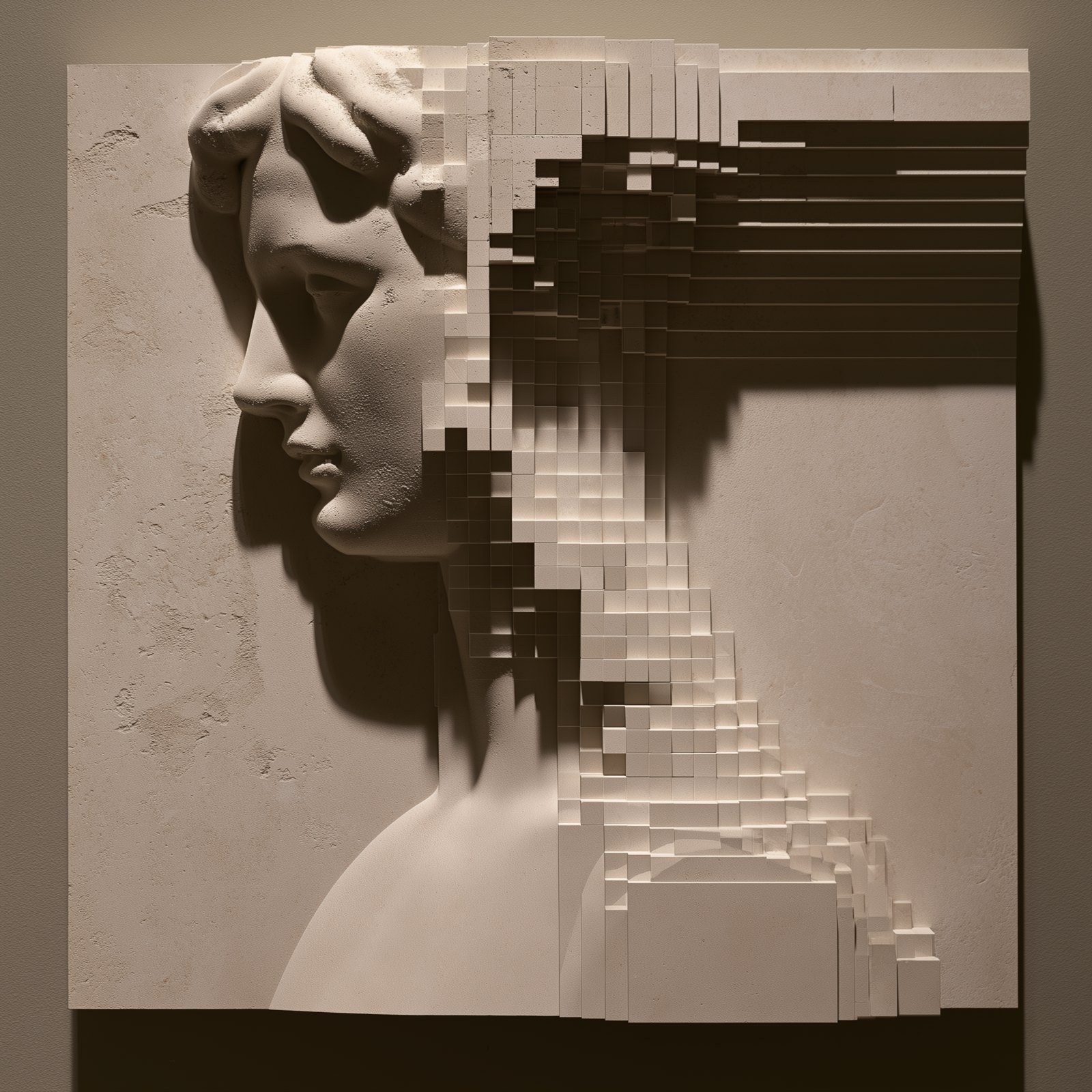
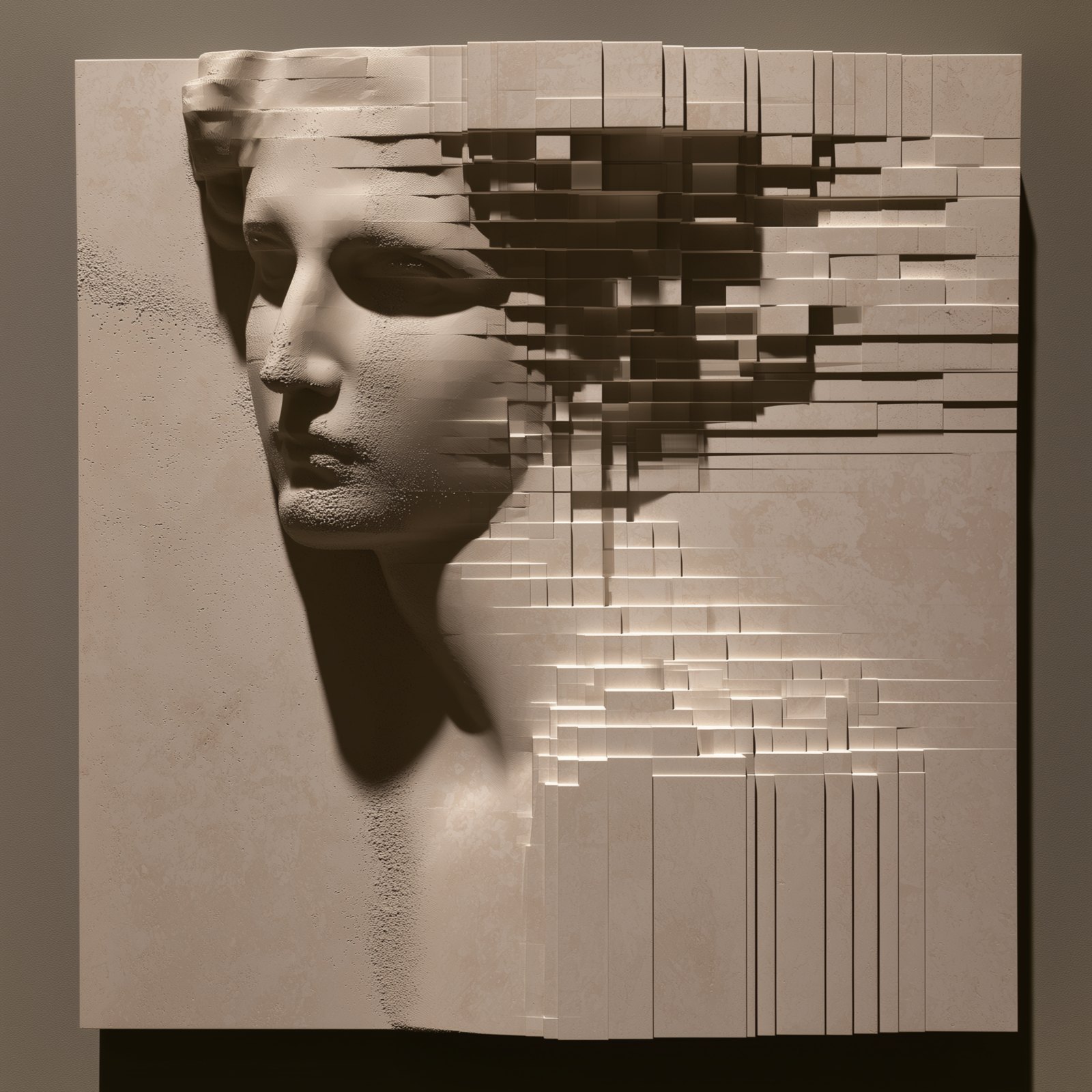
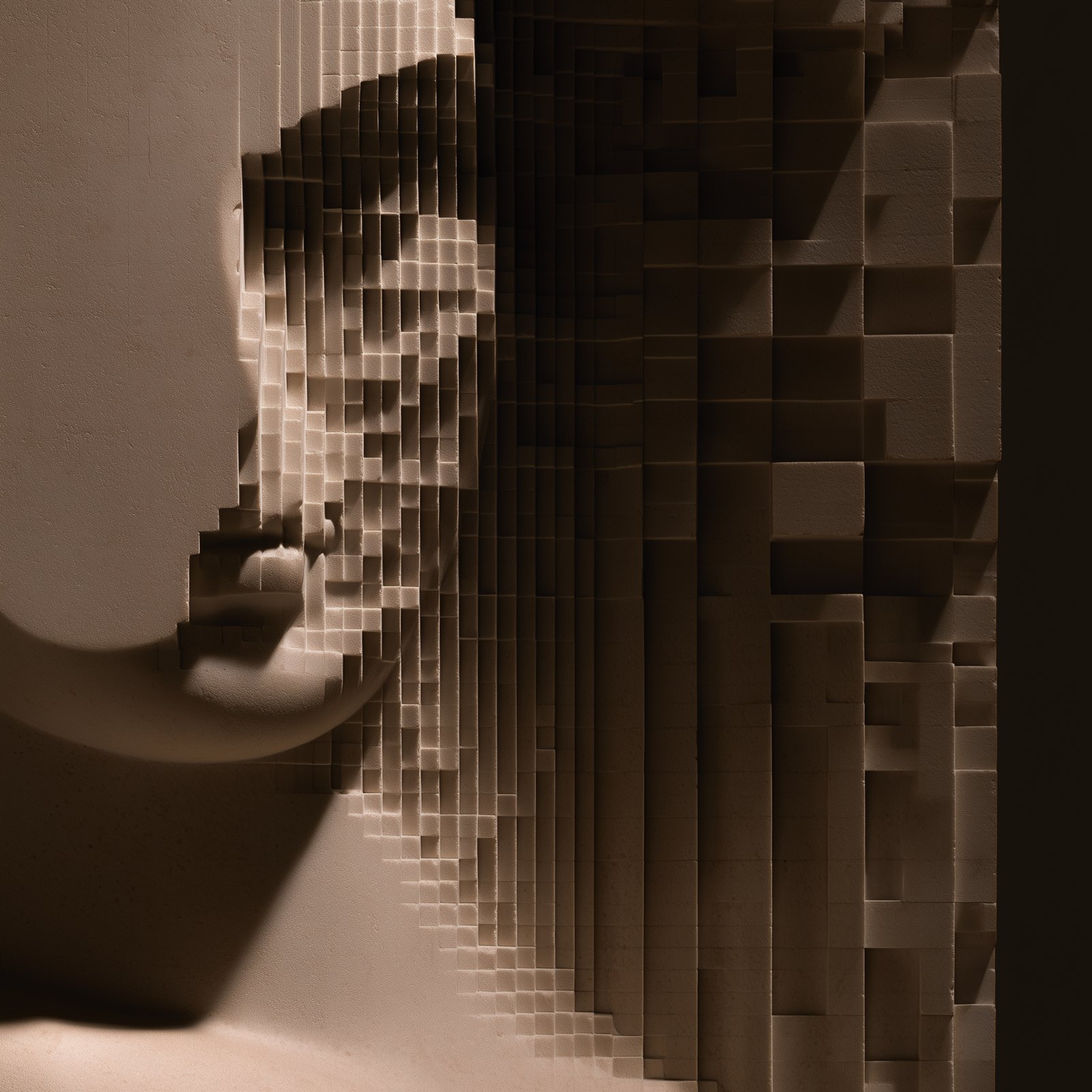
Tessera is Latin for a single piece of mosaic, the small cube from which an image is assembled. In these heads the classical bust is overtaken, partway across, by such cubes: the face continued in units, as if rebuilt from its own fragments.
The motif of the classical head dissolving into pixels is familiar from digital art, where it usually stands for loss or error. Here the cubes are not a glitch but a building method. The face is not breaking down; it is being laid.
The bronzes do not exist. They are images of sculptures that could be cast: volume, joint and patina decided, no metal poured. For centuries a bronze existed first as a model, a drawing, a promise to the foundry. But that model was a physical thing, with weight, made by a hand that would answer for it. A generated image promises a cast without having met any resistance at all.
Tessera holds this gap open rather than covering it. The works are shown as what they are: proposals. Whether one of them is ever cast, and what would change if it were, belongs to the work.
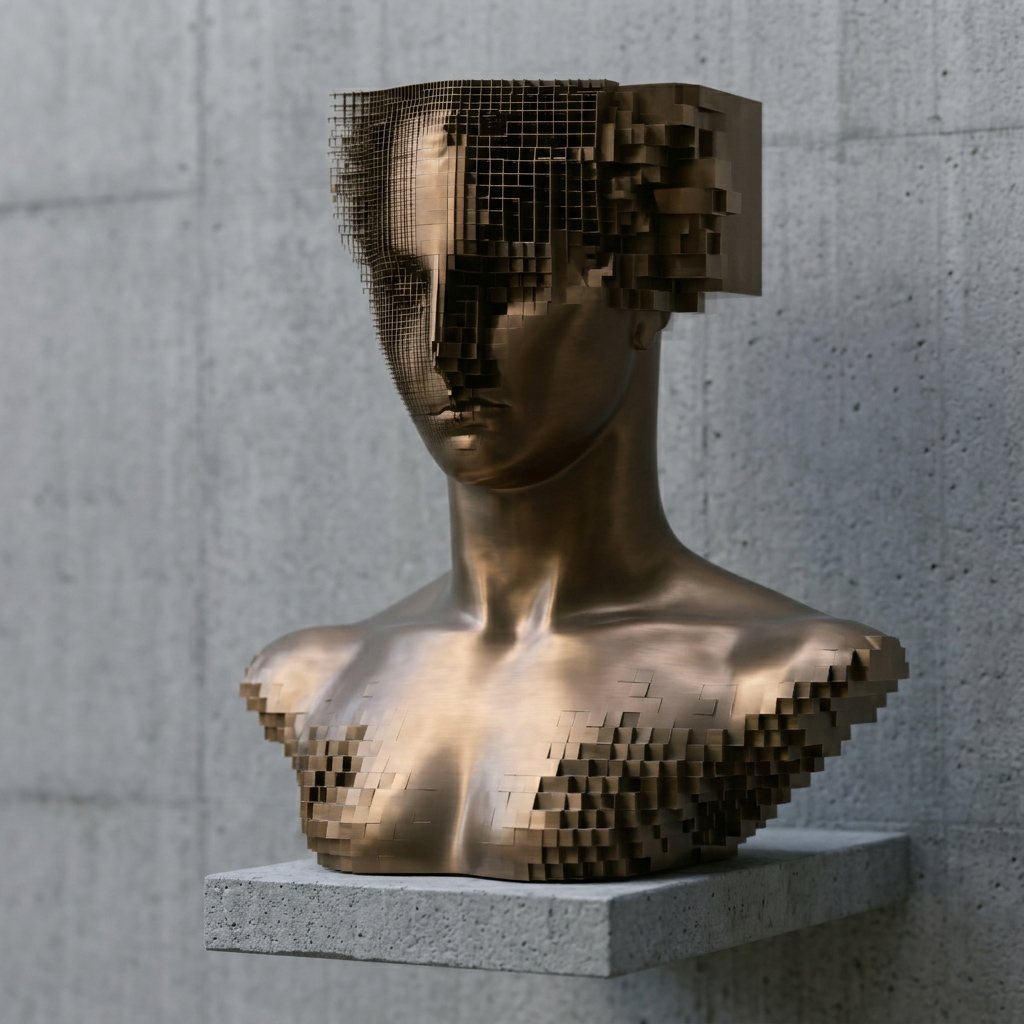
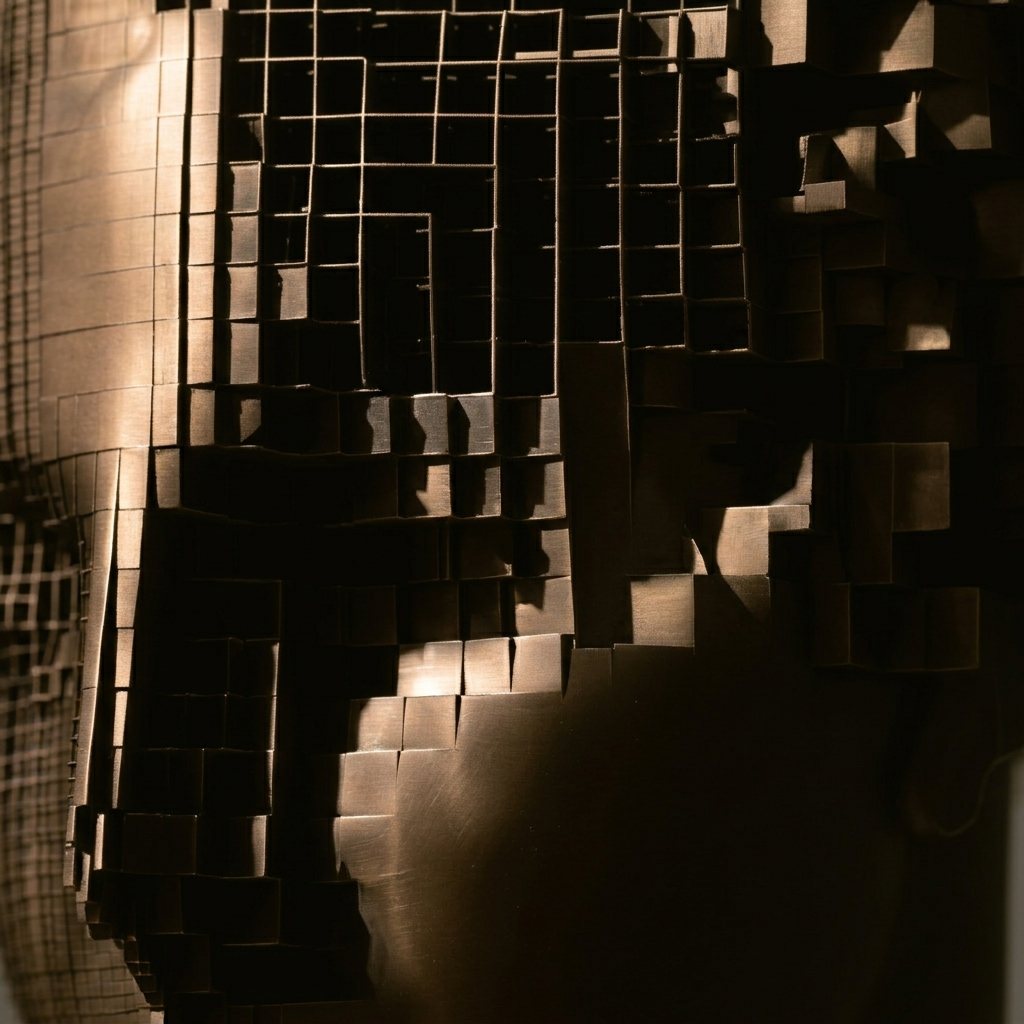
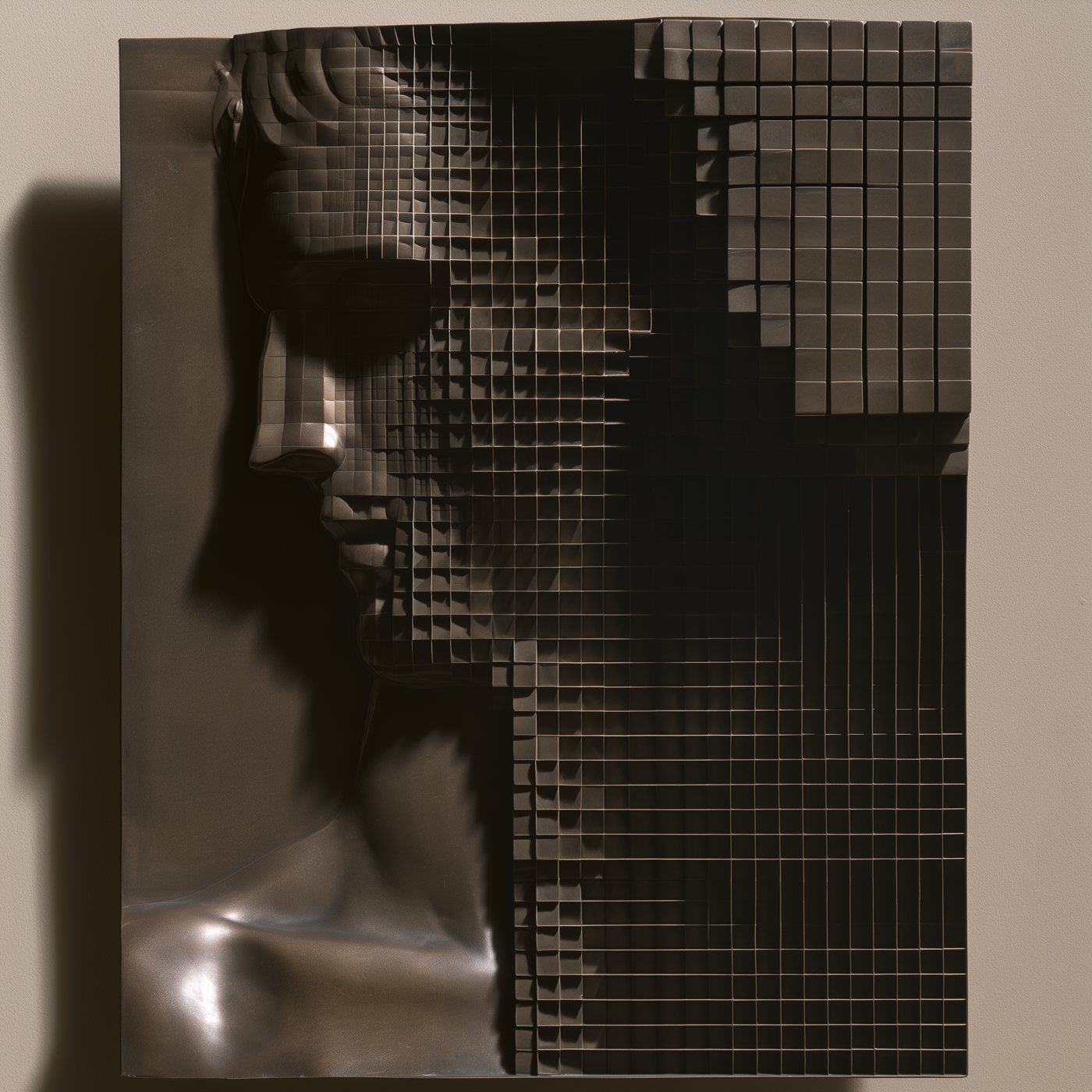
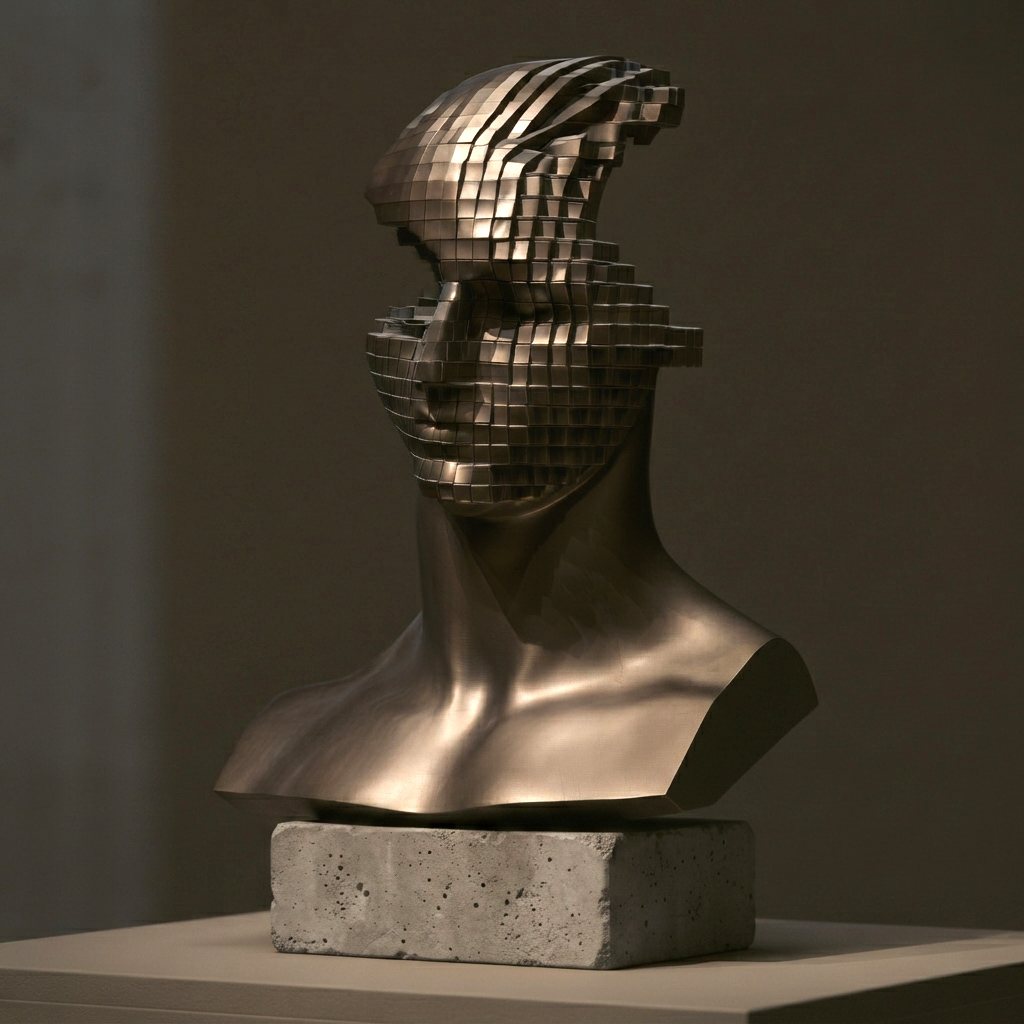
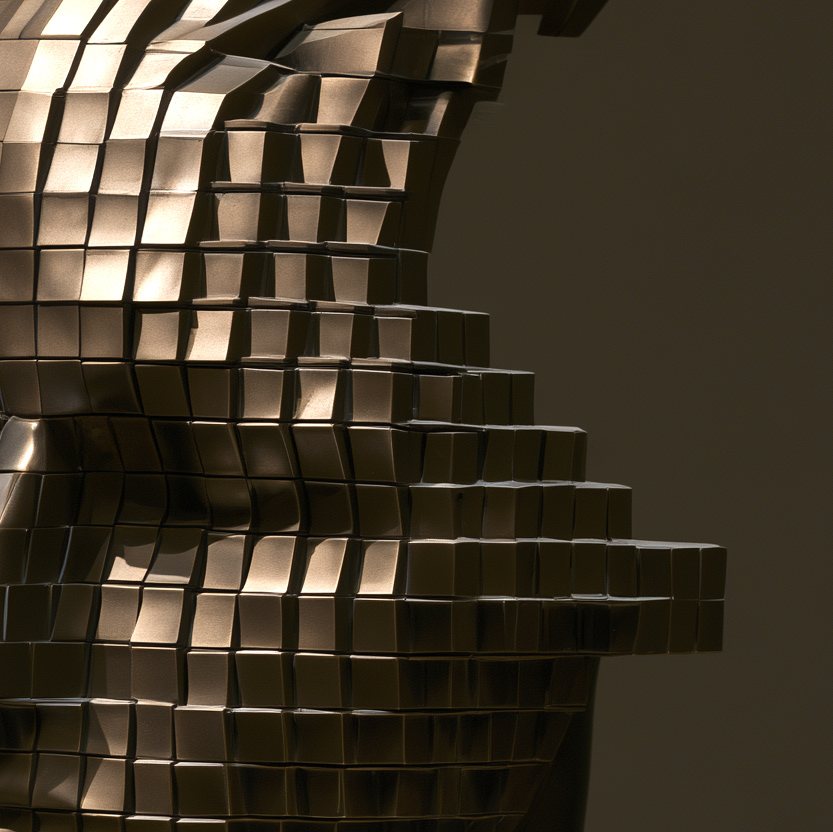
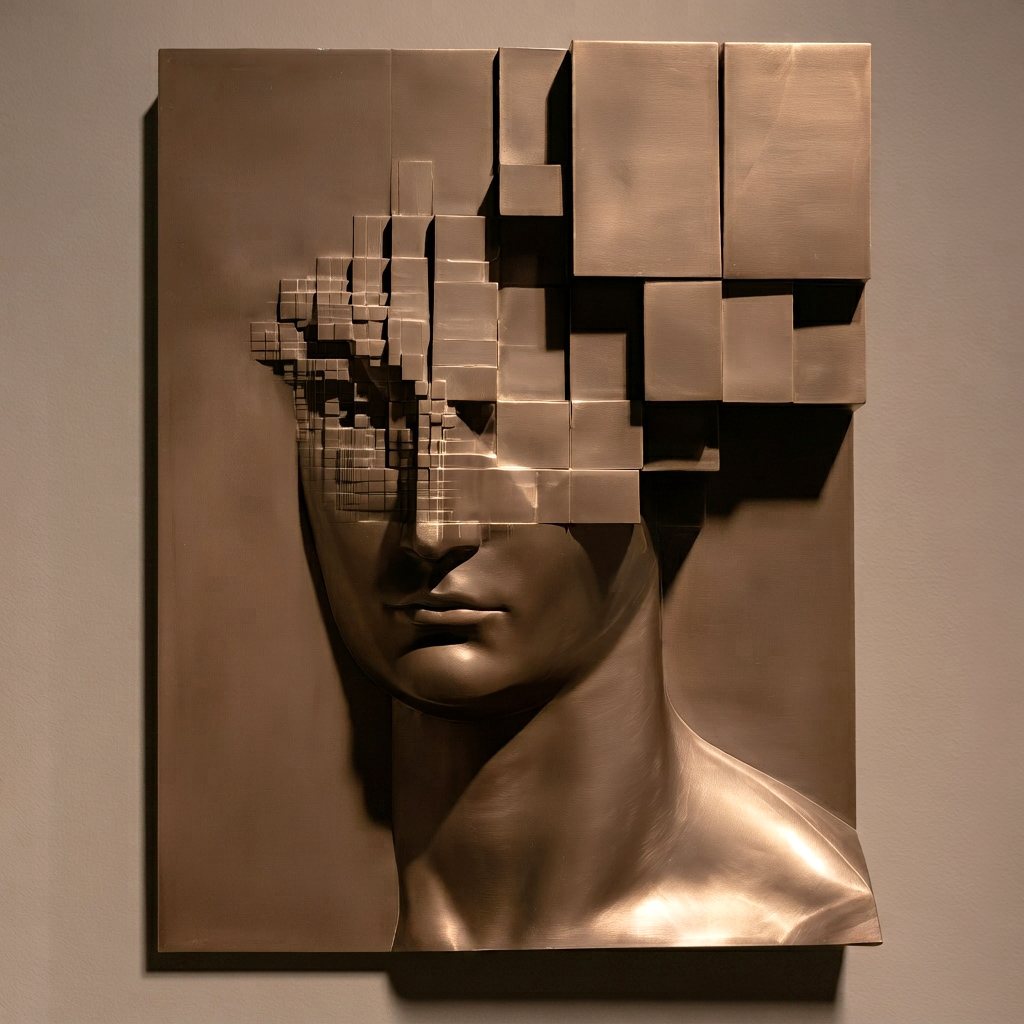
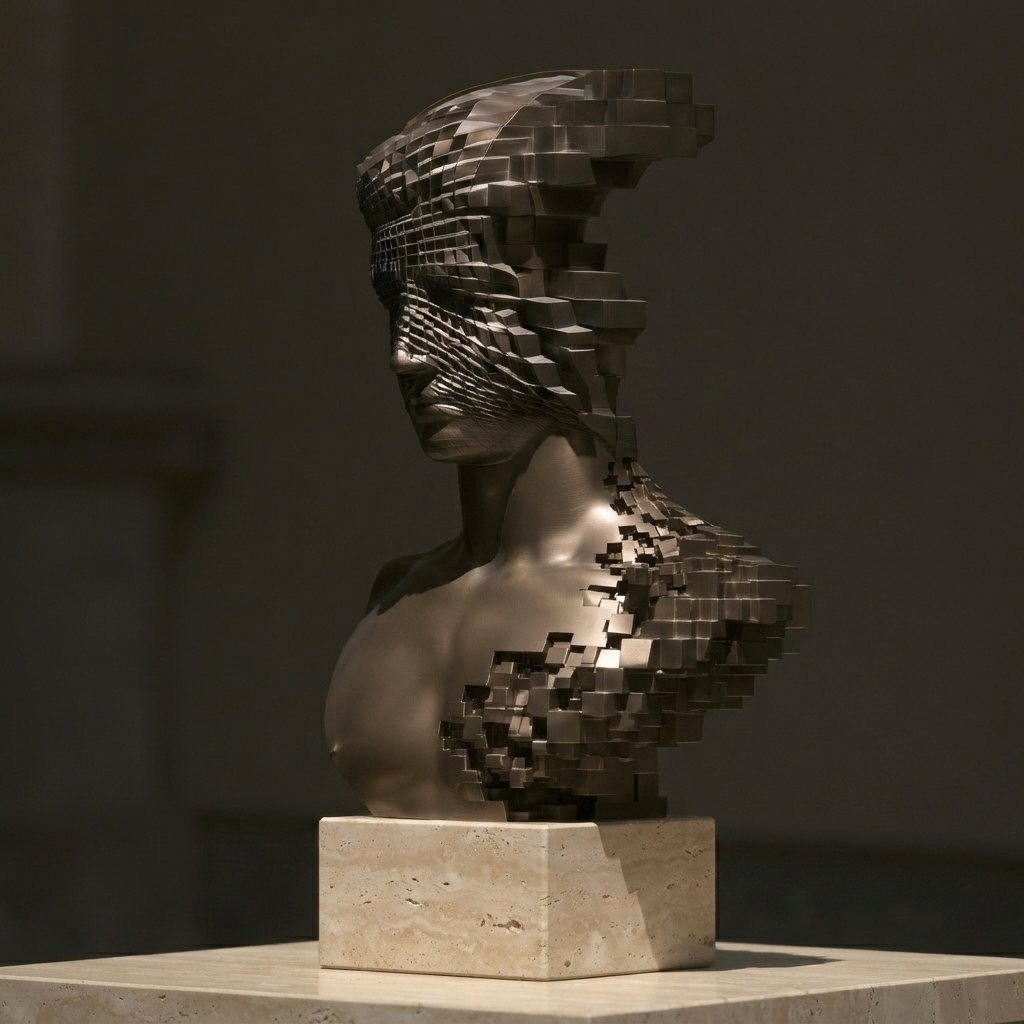
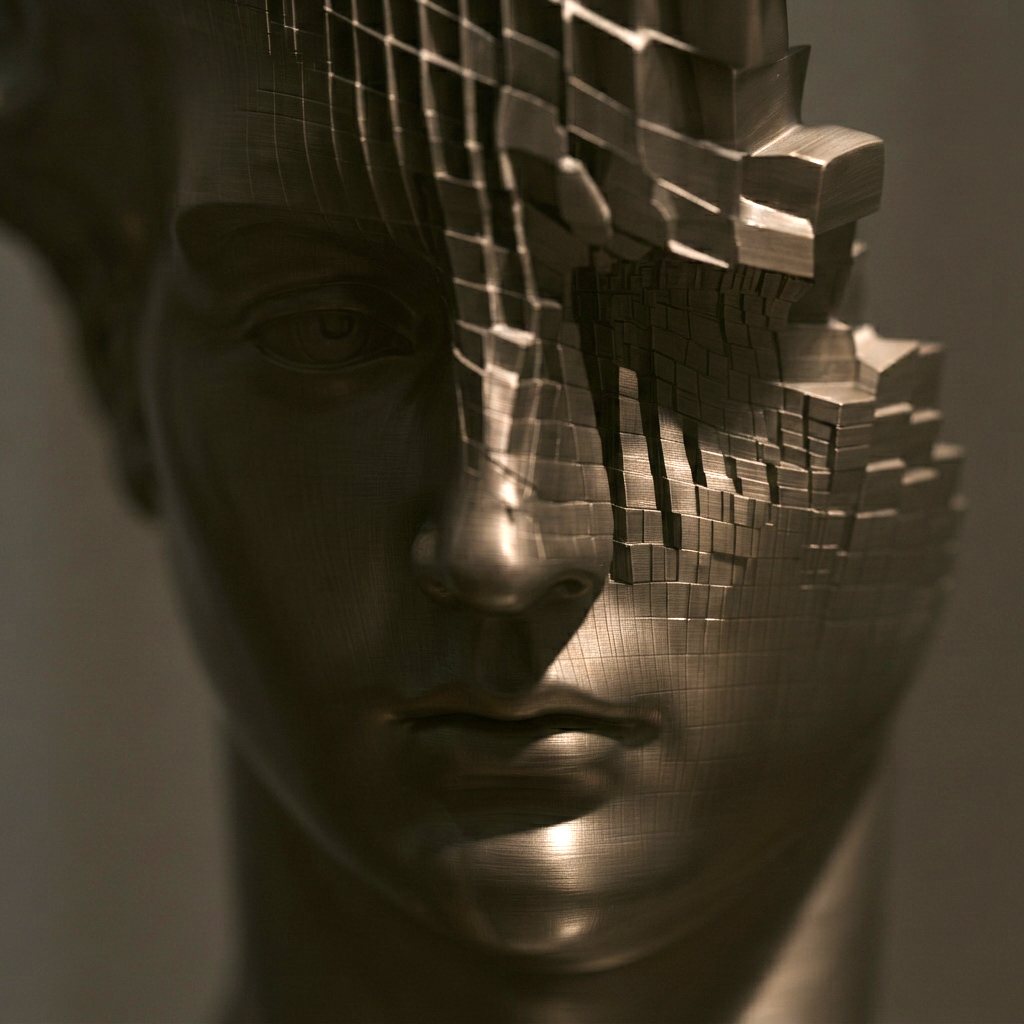
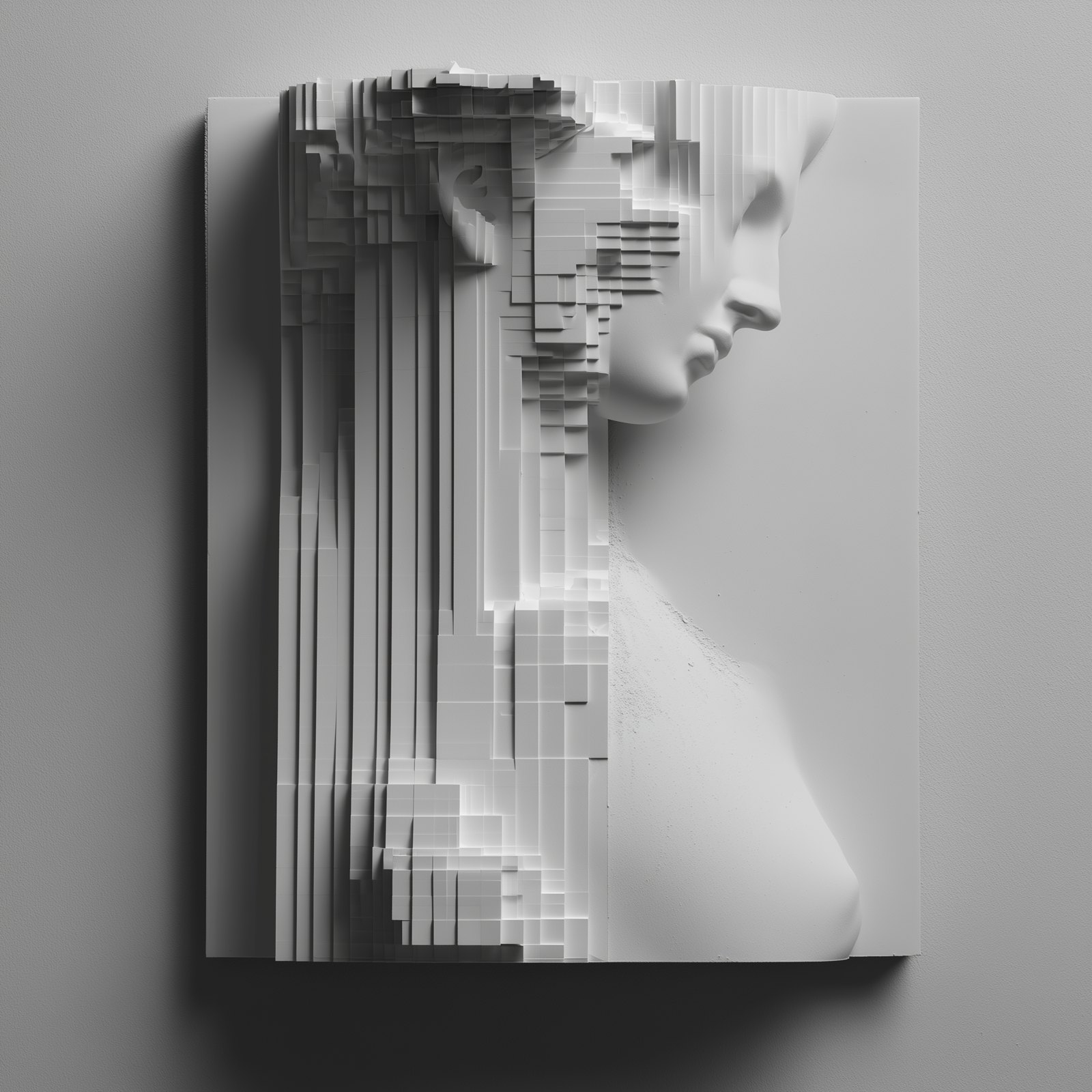
The same principle, turned toward the wall.
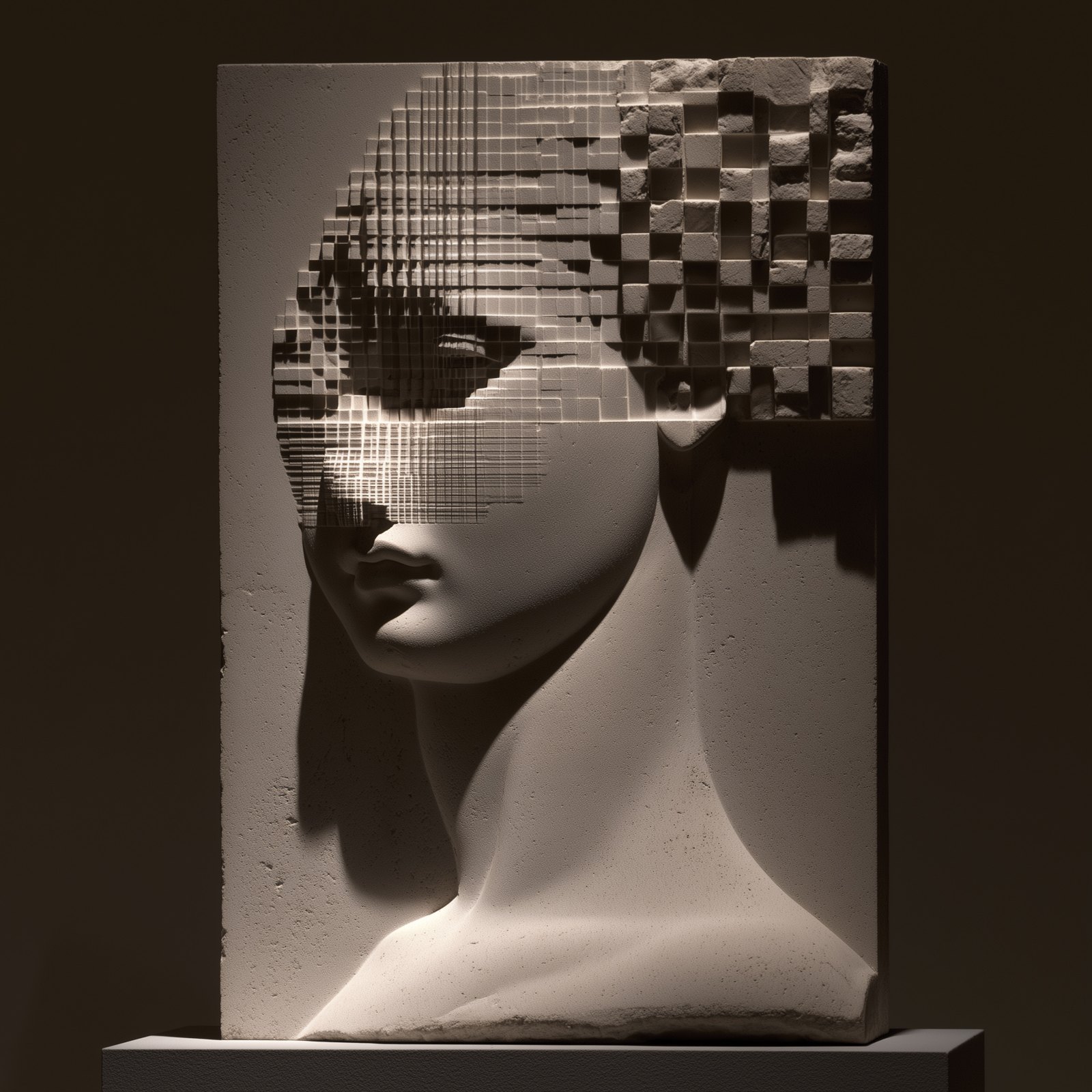
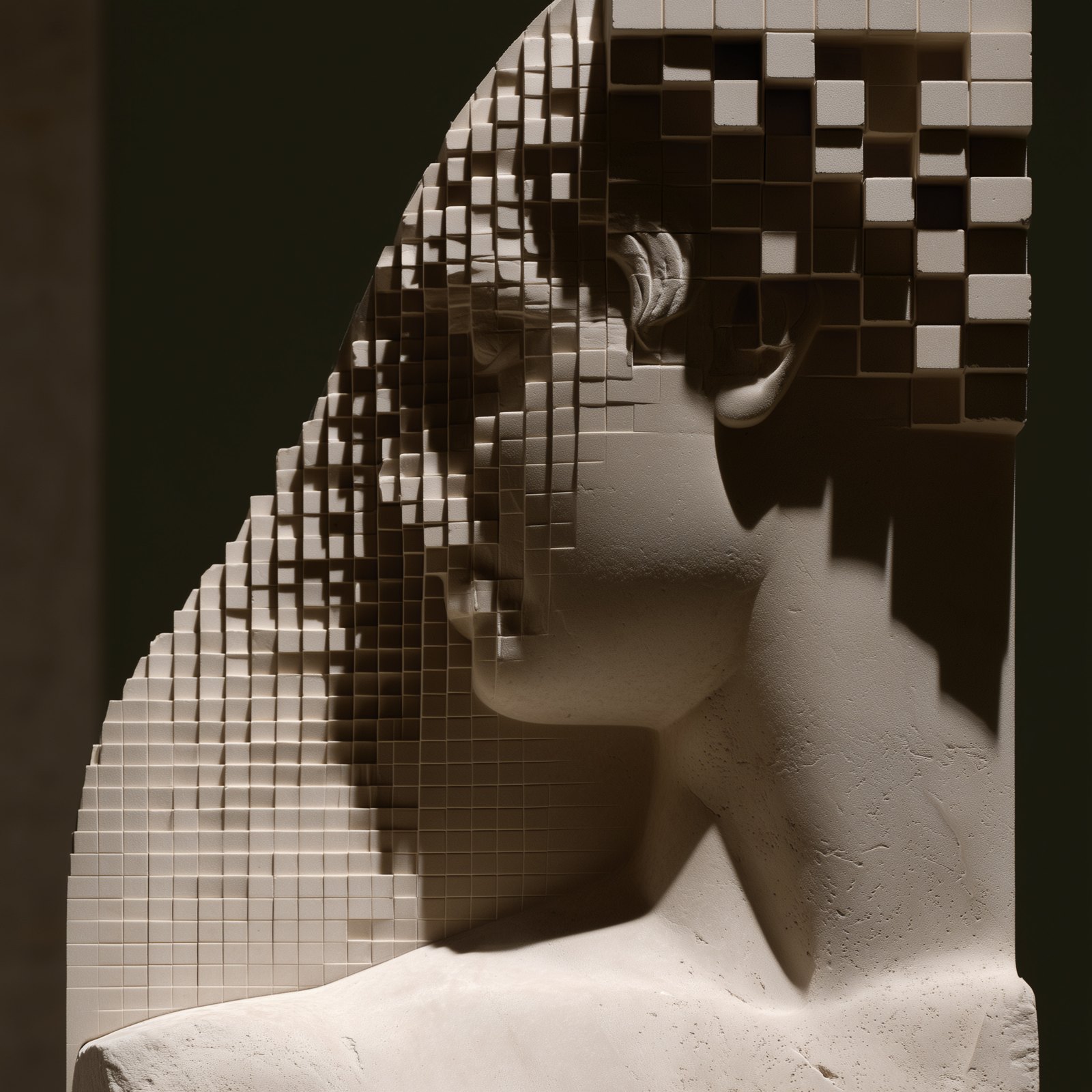
A group of light reliefs extends the series. Each begins as a classical head in profile or three-quarter view and is overtaken by the grid partway across the slab.
They are intended to be cast in Jesmonite, a mineral composite that takes on the surface of stone without ever having been quarried. Realised, they would look carved and be cast: a stone surface that is itself a copy, made from an image. The material would carry the question of the whole presentation.
In raking light every set-back cube becomes a shadow. The dissolution of the face is drawn by what falls across the surface, not by the surface itself.
Slicing Series
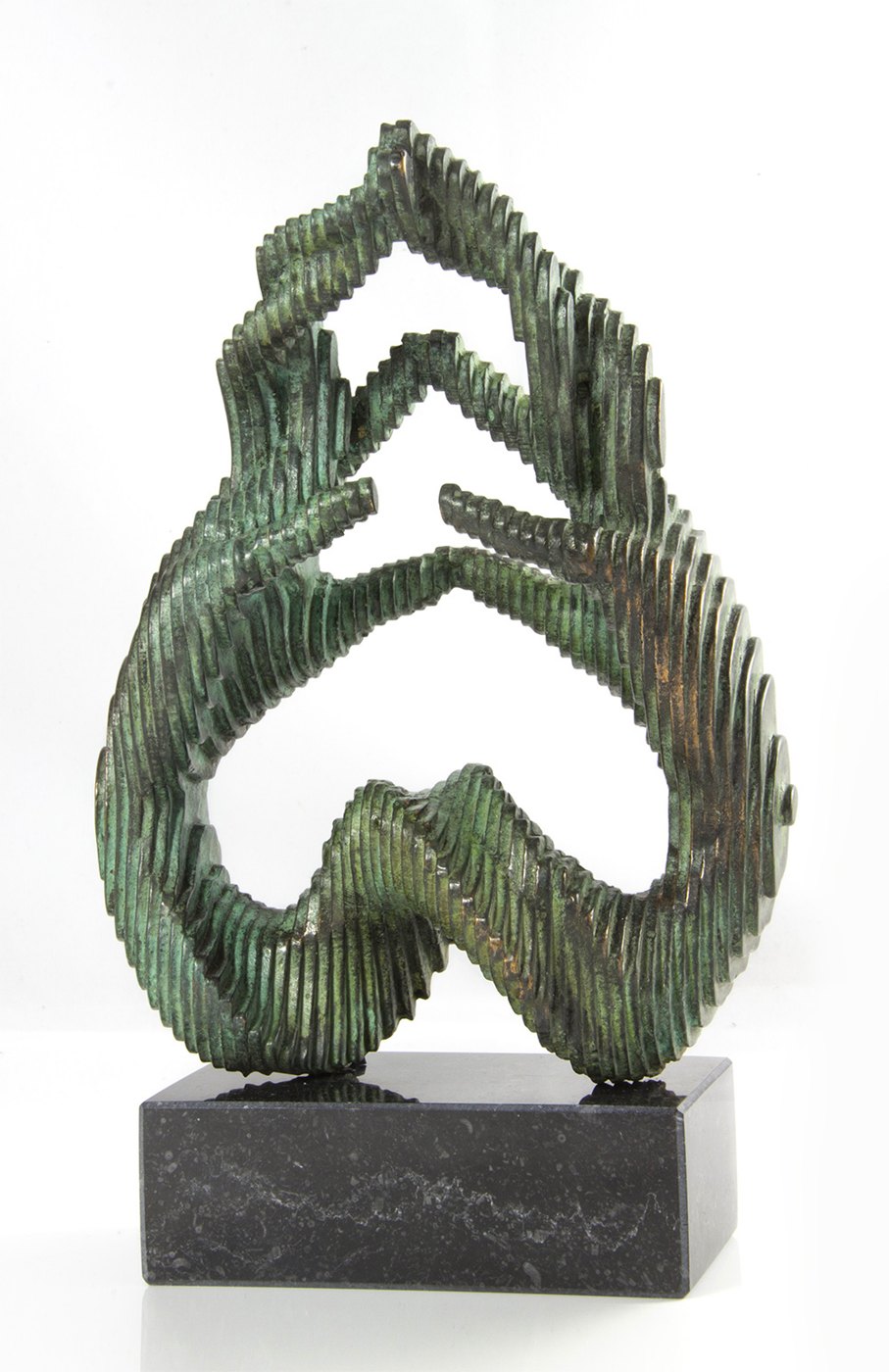
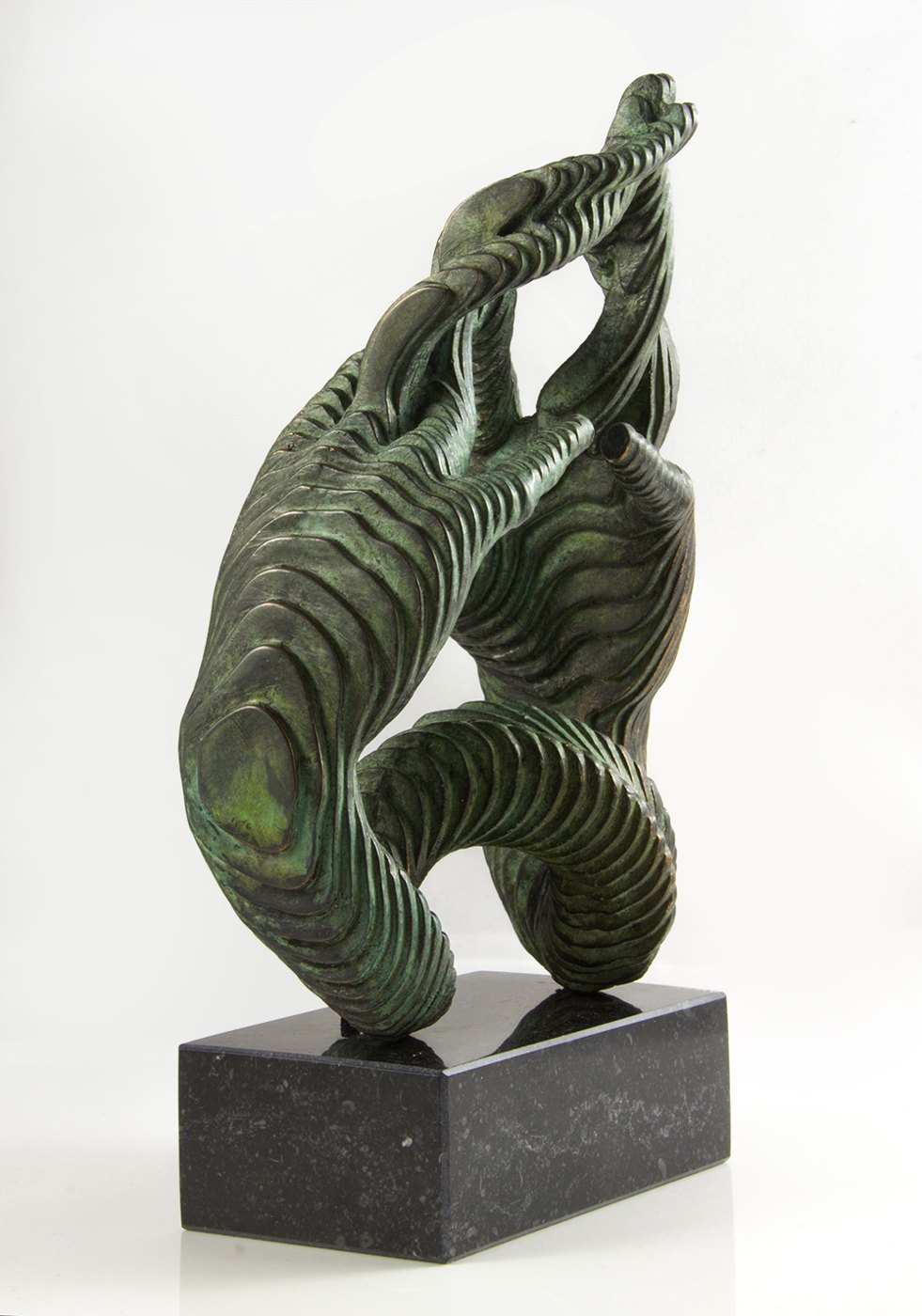
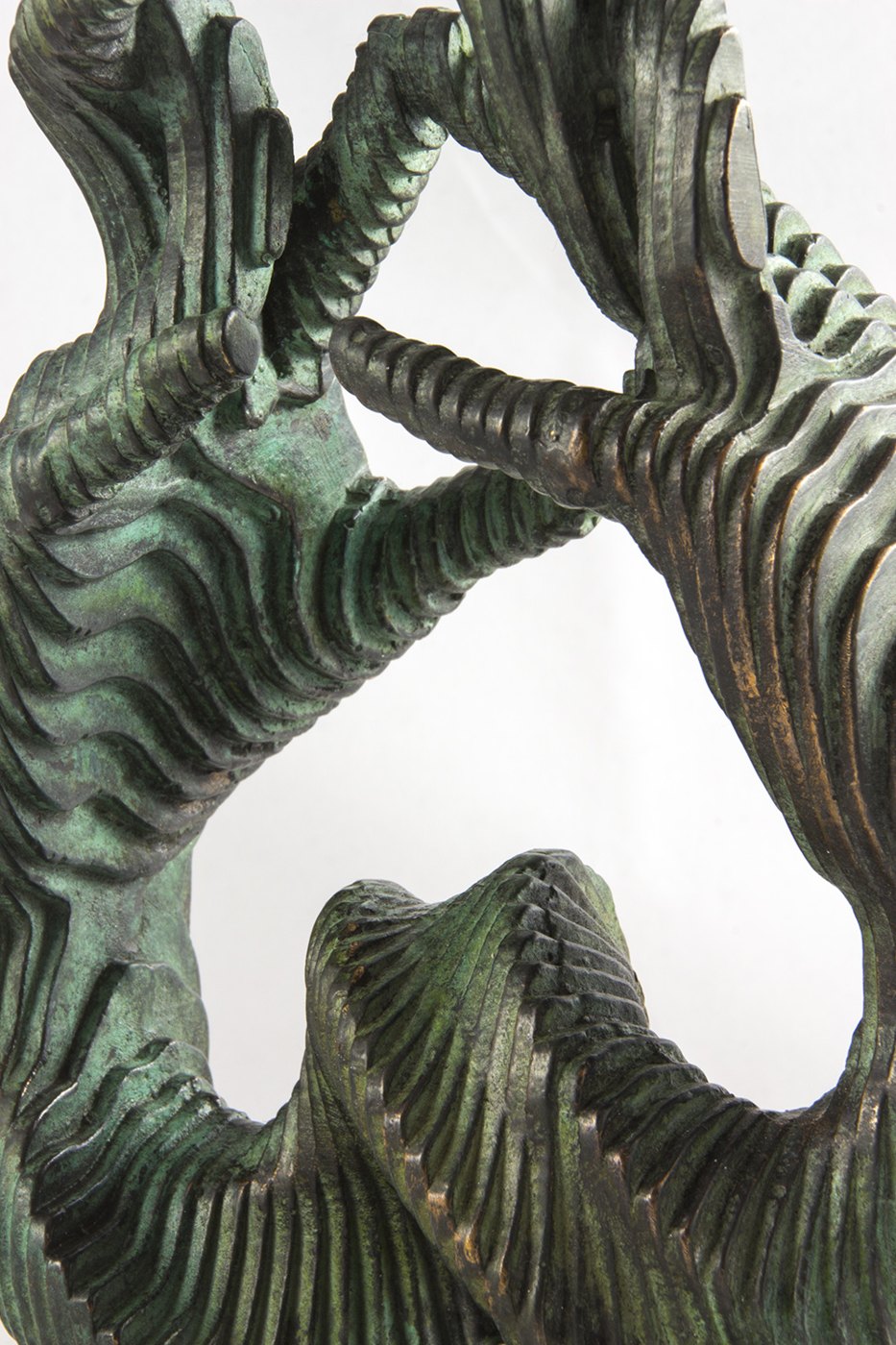
Before Tessera, the route from digital model to bronze had already been taken. For the Slicing Series, begun in 2014, I model a form digitally, cut it into slices of 3 mm cardboard, assemble them by hand and cast the result in bronze. The cardboard original does not survive the casting.
The layering is not a surface effect but the trace of how the work was made: the digital section, turned into material one slice at a time. Entangled Hands (2018) was cast in an edition of five, received the A' Design Award in Silver and was shown at theBlanc Gallery, New York, in 2026.
In Carrara, where I worked as a sculptor in the mid-2000s, robots now mill marble, and artists such as Quayola have made that machine process their subject. Generative systems go a step further. They no longer execute a form someone has designed; they supply the form themselves.
Two responses are common. One insists on the hand, on the chisel mark as the last proof of authenticity. The other accepts the artist as curator of machine output. My work does not escape the second: selection is a large part of what I do. But I do not think it is the whole of it.
What a generator cannot supply is the judgement whether a form would hold as sculpture: whether a cut sits in the right place, whether a surface could be carved, whether a mass carries. That judgement comes from years at the block, and it is the one part of the process I cannot delegate. It is also the part that is hardest to see.
The gilded circuitry inside the stone heads is, in that sense, less a statement about technology than an image of this situation: something technical inside a form that still insists on being read as stone. Whether that is sculpture or a picture of sculpture, these works do not decide. They are made to keep the question open.
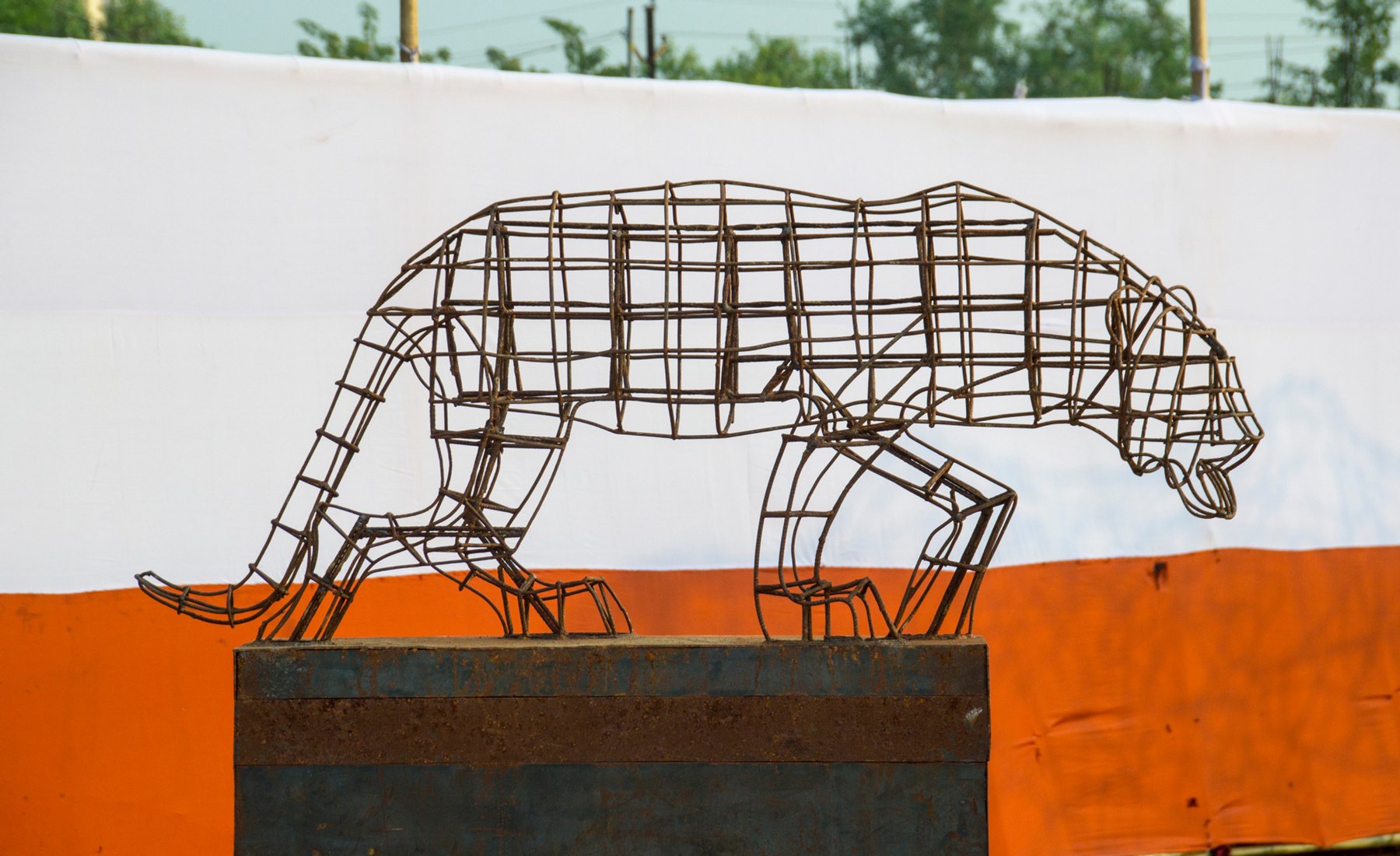
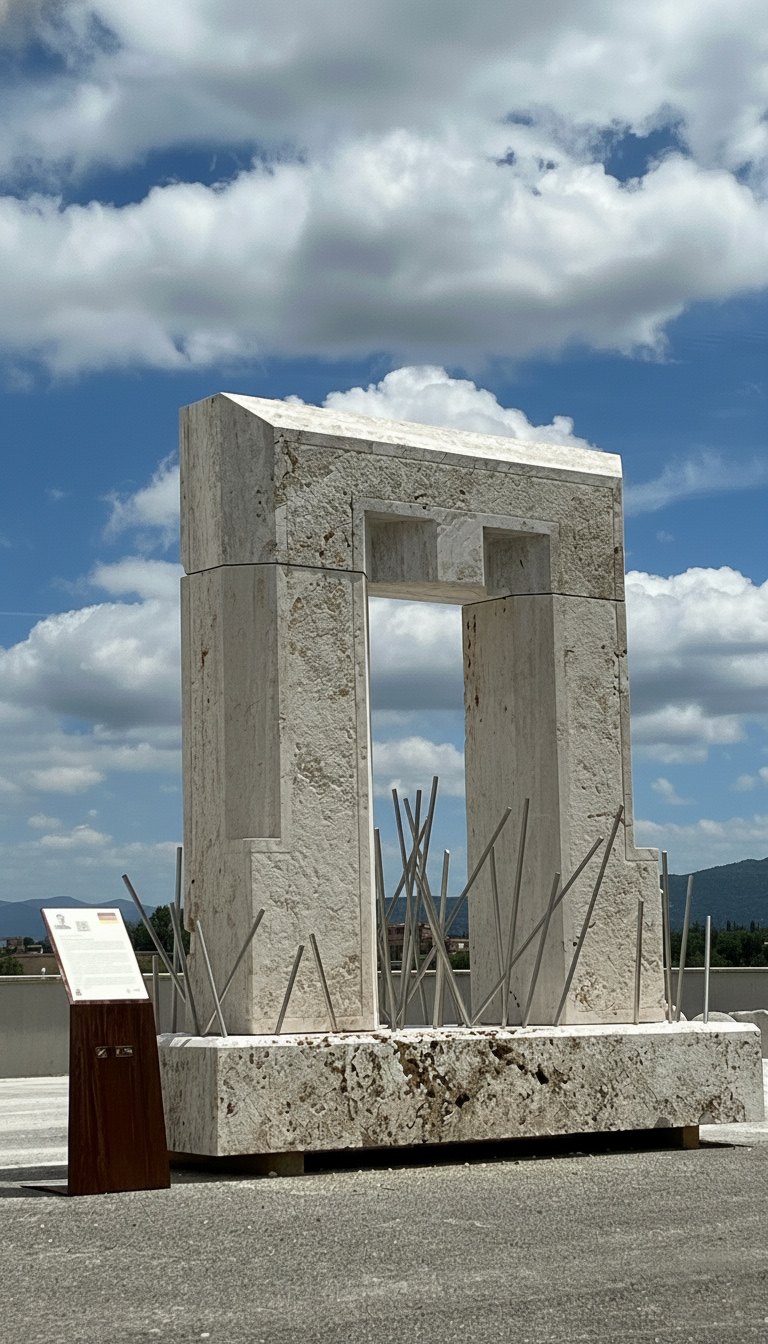
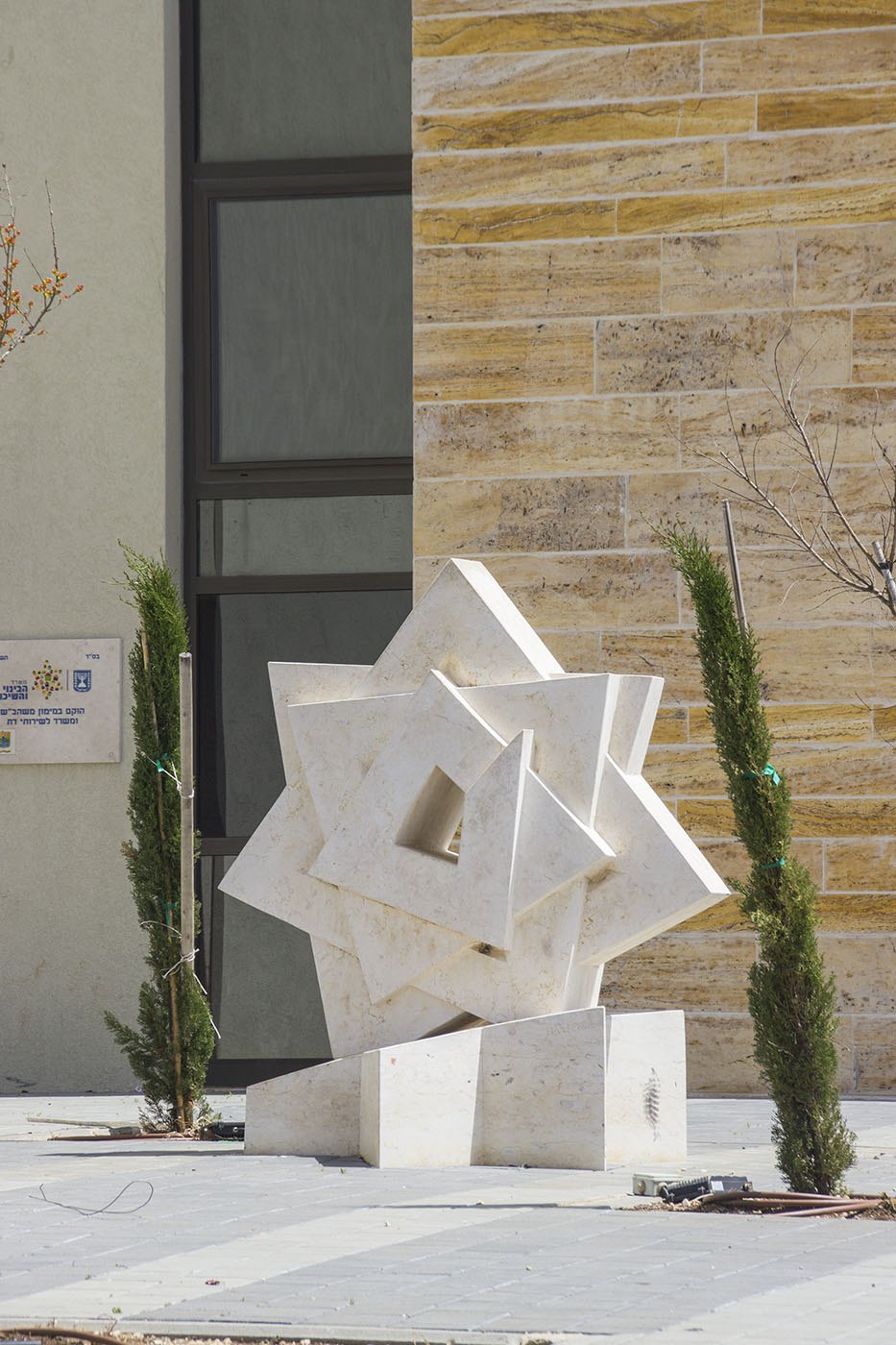
The judgement these images depend on comes from the block. Three of more than twenty-five works made at international sculpture symposia.


Born 1978 in Düsseldorf. German-Norwegian. Studio and workshop in Groß Kienitz near Berlin.